Navigating the AI Landscape: Why a Hybrid Approach is Essential for Businesses Today

Artificial intelligence is transforming how businesses operate, but the question of where and how to deploy AI tools is becoming more complex. Just as companies once debated public versus private cloud solutions, today’s organizations face similar choices with AI. The early rush to use large, frontier AI models hosted on public platforms is giving way to a more nuanced strategy. Many businesses now recognize the value of combining different AI approaches to balance performance, privacy, cost, and control. This post explores why a hybrid AI strategy is becoming essential and how companies can implement it effectively.
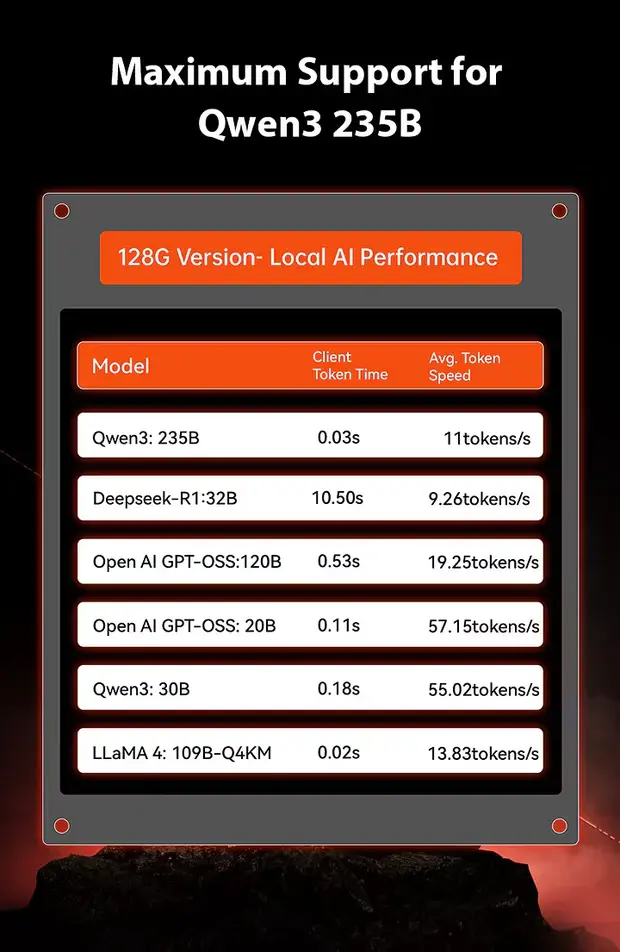
Stats from GMTEC EVO-x2 128gb mini-AI-PC
The Shift from Public Cloud to Hybrid AI Models
When cloud computing first emerged, most businesses moved quickly to public cloud services. The convenience and scalability were unmatched. Over time, concerns about data privacy, security, and cost at scale led many organizations to reconsider. Some shifted back to on-premises solutions, while others adopted hybrid cloud models that combine public and private resources.
AI is following a similar path. Initially, companies relied heavily on frontier AI models hosted by large providers. These models excel at complex reasoning, research, and generating polished final outputs. However, as AI use cases grow, so do concerns about privacy, latency, and operational costs. This has sparked interest in running open source large language models (LLMs) locally or in private clouds.
Why a Hybrid AI Approach Works Best
A hybrid AI strategy means using different AI models and deployment methods depending on the task, data sensitivity, and cost considerations. Here’s why this approach makes sense:
Privacy and Control
Sensitive data should not leave company premises or trusted environments. Running open source LLMs locally allows businesses to keep data secure and comply with regulations.
Cost Efficiency
Frontier AI models can be expensive at scale. For high-volume, straightforward queries, local models reduce costs by handling routine tasks without calling costly APIs.
Performance Optimization
Smaller, locally hosted models can quickly process simple requests with low latency. More complex problems can be escalated to frontier models that require heavy compute power.
Flexibility and Resilience
A hybrid setup avoids dependence on a single provider or technology. If one system experiences downtime or issues, fallback models ensure continuous service.
How Businesses Can Implement Hybrid AI
1. Route Simple Queries Locally
Many AI tasks involve straightforward questions or filtering sensitive information. Deploying open source LLMs on-premises or in private clouds can handle these efficiently. Examples include:
Customer support chatbots answering FAQs
Filtering and anonymizing sensitive data before processing
Basic document summarization or classification
2. Escalate Complex Tasks to Frontier Models
For tasks requiring deep reasoning, creativity, or final output refinement, frontier AI models remain the best choice. These models benefit from massive training data and compute resources. Use cases include:
Research and development assistance
Complex problem-solving and decision support
Generating polished marketing or technical content
3. Choose the Right Hardware for Local AI
Recent advances in AI hardware have made running large models locally more accessible. Companies no longer need custom-built machines with top-tier GPUs like the NVIDIA 5090. Instead, compact AI computers such as the GMKtec EVO-x2 128GB or the NVIDIA DGX Spark Founders Edition Mini PC offer powerful performance in smaller form factors. Rack-mounted AI servers also provide scalable options for enterprises.
4. Understand Your Requirements and Skills
The gap between frontier and open source models is shrinking, especially for straightforward tasks. However, the hardest 5–10% of problems still require frontier AI’s capabilities. Businesses should carefully assess:
The complexity of their AI tasks
Privacy and compliance needs
Budget constraints
In-house AI expertise and infrastructure
This understanding helps avoid blindly choosing a model and ensures the AI strategy aligns with actual needs.
Real-World Examples of Hybrid AI Use
Financial Services
A bank uses local LLMs to screen transactions for fraud patterns without exposing sensitive customer data. Complex risk analysis and reporting are handled by frontier AI models.
Healthcare
A hospital runs open source models on-premises to process patient records securely. Frontier AI assists with medical research and generating treatment recommendations.
E-commerce
An online retailer routes common customer queries to local chatbots, reducing API costs. Product description generation and personalized marketing content are created using frontier AI.
Looking Ahead to 2027 and Beyond
By 2027, the AI landscape will likely be even more diverse. Open source models in the 70B to 405B parameter range are rapidly improving and closing the performance gap. Businesses that invest in hybrid AI strategies will enjoy:
Greater control over data and costs
Faster response times for routine tasks
Access to frontier AI power when needed
Flexibility to adapt as AI technology evolves
The key is to avoid one-size-fits-all solutions and build AI systems tailored to specific business needs.
We now have the compute power of a 200B model running efficiently on a 350 watt mini computer, That power is sufficient for the majority of Agents and queries for the average user. So now we need to consider should we reduce our Frontier usage? Are we doing Inference or are we training models, both can now be done locally at a comparable level.


Comments